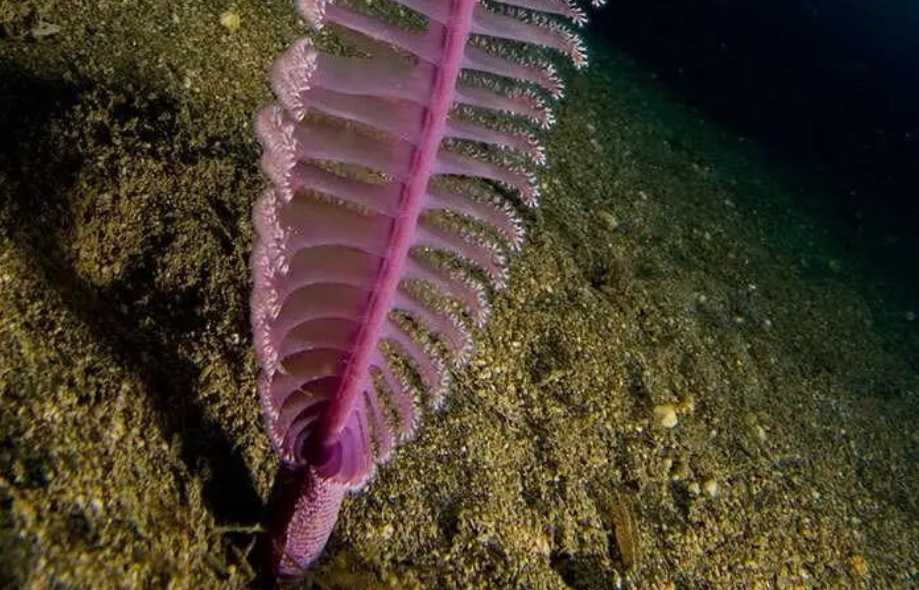
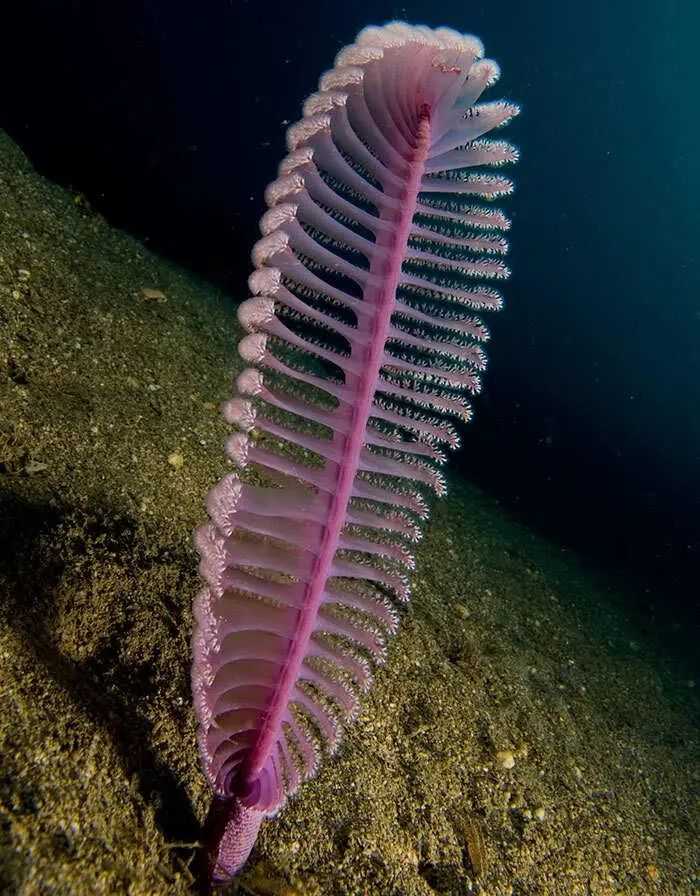
Recognized for its striking resemblance to a quill pen, the sea pen is a colonial marine invertebrate that thrives in shallow to deep ocean waters. Composed of hundreds to thousands of polyps, these colonial organisms form feather-like structures, using their unique anatomy to capture plankton and thrive in diverse marine environments.
Source: Images from the Internet, if there is any infringement, please contact the removal of
-
Structure of a Sea Pen
The sea pen features a central stalk (rachis) anchored in the seafloor by a bulbous holdfast. Along the rachis, lateral branches bear numerous polyps:
- Autozooids: Larger feeding polyps with tentacles that sweep plankton from the water.
- Siphonozooids: Smaller polyps that pump water through the colony, aiding feeding and waste removal.
This colonial design allows sea pens to grow up to 1 meter tall, with colors ranging from pale yellow to red or purple based on species and habitat.
-
Bioluminescence in the Dark
Many sea pens emit a blue-green light when disturbed, a defense mechanism thought to startle predators. The bioluminescent chemicals, produced by specialized cells in the polyps, add to their otherworldly allure in the ocean’s twilight zones.
-
Filter Feeding Strategy
Sea pens extend their tentacles to capture microscopic plankton, using cilia to move prey toward their mouths. Each autozooid functions independently, while the colony shares nutrients through a common gastrovascular cavity for collective survival.
-
Habitat and Distribution
Found in temperate to tropical seas, sea pens prefer soft sediments like sand or mud, where their holdfasts anchor securely. They thrive in areas with moderate water flow, which delivers a steady plankton supply. Some species inhabit deep waters, while others retract into sand during low tide in intertidal zones.
As filter feeders, sea pens clarify water and recycle nutrients. Their colonies provide habitat for small invertebrates, fish, and crustaceans, acting as oases in otherwise barren seafloors.
While not currently endangered, sea pens face threats from bottom trawling, coastal development, and ocean acidification. Their sensitivity to sediment disturbance makes them indicators of marine health. Protecting their habitats—from shallow estuaries to deep-sea plains—remains crucial for preserving these living "feathers" of the ocean, blending biological ingenuity with striking beauty.